Arindam_Ghosh_w
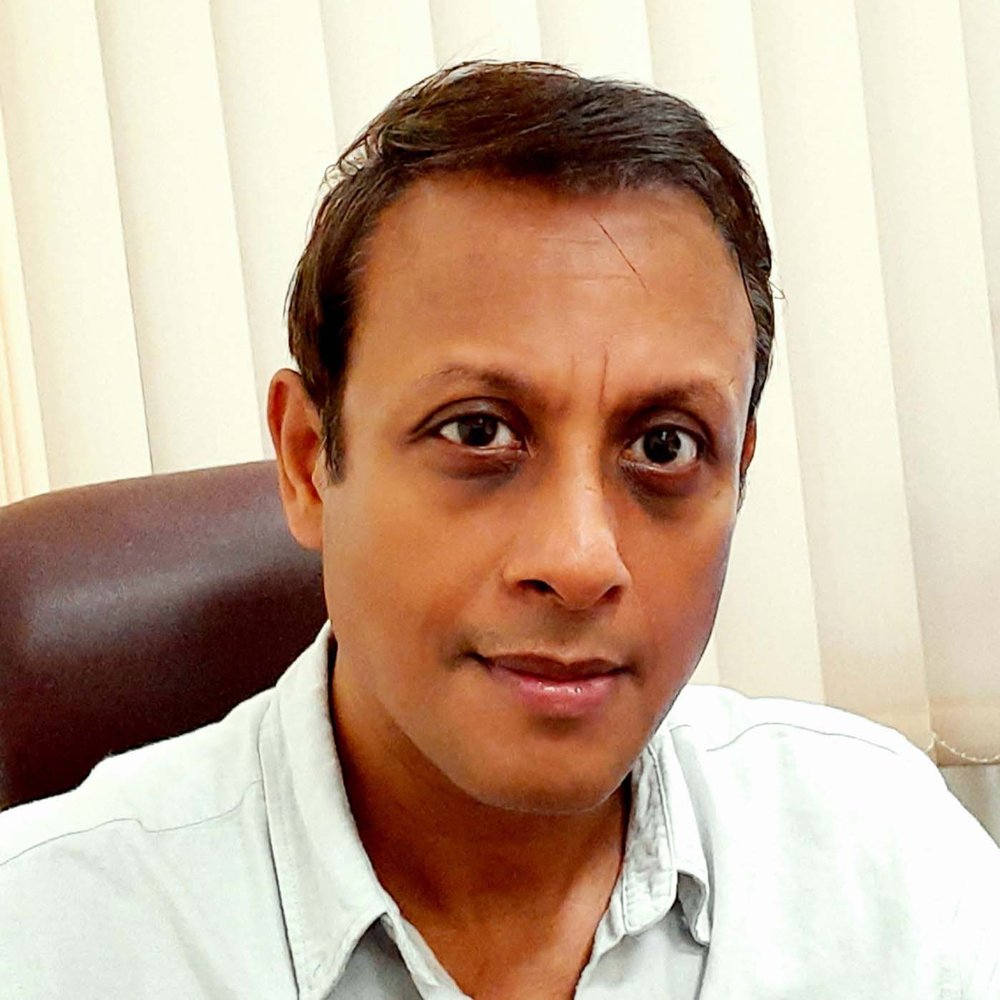
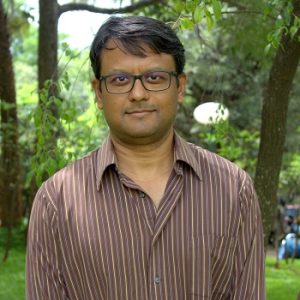
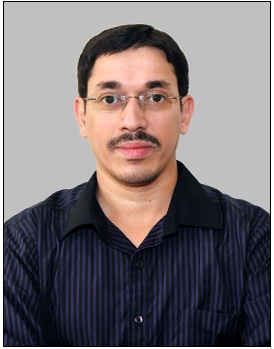
His research group is involved in investigating structural, electrical and magnetic properties of various nanoscale systems. His research interests extend from fundamental quantum mechanical effects on charge and spin states in nanosystems, to carbon-based electronics, critical behavior in smart materials, to new schemes of sensing with nano/micro-electromechanical sensors.
Akshay
He conducts research in the areas of nano electromechanical systems, nonlinear dynamics, MEMS and NEMS sensors, and quantum measurements.  His group has demonstrated the use of mechanical nanoresonator to enhance or reduce the energy exchange between the vibrational modes and the suitability of metallic carbon nanotubes(CNTs) as thermo-optic tuners.
Apoorva
He is notable for his work on quantum algorithms, and the application of information theory concepts to understand the structure of genetic languages. His major field of work has been the theory of quantum chromodynamics, where he has used lattice gauge theory techniques to investigate spectral properties, phase transitions, and matrix elements.
Abha
Her group works on engineering of sensors and energy storage systems and focuses on studying interfaces between different physical phenomena at nanoscale. Two-dimensional graphene and metal dichalcogenides based field effect transistors (FET) are employed to develop nanoscale devices. The atomic scale interfaces are coupled with two-dimensional array of metal inclusions for opto-electronic doping used for molecular memory devices. Molecular interaction is studied for the fabrication of molecular switch. On-chip electrochemical supercapacitor study provides novel avenues to miniature energy storage system beyond batteries. Self-powered sensors and energy storage systems are also the focus of ongoing research.
Abhishek
He is involved in diverse fields including machine learning (ML), 2D materials, thermoelectrics, catalysis, optical properties, topological materials and defects using density functional based approaches. In field of machine learning, Prof. Singh's group focuses on the development of advanced materials database and building ML based models for accurate prediction of specific properties. His group has established India's first computational materials database aNANt (http://anant.mrc.iisc.ac.in/), which consists of electronic and structural properties of 25000 MXenes. This database is currently the world's largest database on 2D materials.
Akshay-Singh
His lab uses a variety of optical and electron spectroscopy tools to characterize synthesized and naturally occurring materials. The group focuses on the measurement of fundamental dynamics, to discover new physical phenomena, and synthesize non-naturally occurring materials leading to advances in opto-electronics and quantum computing.
profAmbarishGosh-300x300
He is known for his contributions on nanorobots, active matter physics, plasmonics, and metamaterials. His group has wide interests in studying light-matter interactions in novel nanoscale systems, ranging from electron bubbles in superfluid helium to helical nanoplasmonic devices, and magnetic nano-propellers.
Ananth-Headshot-238x300-1
In the areas related to IQTI, his group is interested in the use of quantum-mechanical simulations to model the synthesis of two-dimensional (2D) materials and structure-property relationships in doped and defective 2D materials. Among other research areas, Ananth’s group also works on combined quantum and classical simulations to model nanofluidic and interfacial phenomena and the electro/thermocatalytic activity of 2D materials and single-atom catalysts.
thumbnail_Anindya
His group works in the area of quantum transport of nano-devices at ultra-low temperatures and high magnetic fields using reduced dimensions like two-dimensional graphene, two-dimensional transition metal dichalcogenides, topological insulator, one-dimensional nanowires and their hybrids. Their pioneering transport studies on emerging two-dimensional materials are followings: Transport properties of graphene-Moiré superlattices; Compressibility studies to unravel electron interactions in graphene quantum-Hall systems; Unconventional Andreev reflection at the graphene-superconductor junction; Anomalous coulomb drag in dimensionally mismatched heterostructures; Quantum noise to unravel the edge dynamics in ultra-clean graphene p-n junction; Thermal transport in integer and fractional quantum Hall states of graphene; Light-matter interaction in atomically thin p-n junction.
1614255171097
His research is aimed at understanding new physical properties that emerge in nanoscale matter. His group recently demonstrated ground state charge transfer between semiconductor nanocrystals, leading to the formation of “compounds” where individual quantum dots take the place of atoms. Yet other efforts in his lab are devoted to the development of semiconductors composed of earth abundant non-toxic elements, novel methods of synthesis and building materials with unusual properties. Email: anshup at iisc dot ac dot in
1632062408777
His research interests are in quantum transport in mesoscopic devices and low-dimensional superconductors with a view toward a fundamental understanding of the quantum phenomenon and developing high-sensitivity nanoscale material and light sensors. His research group specializes in creating high-quality heterostructures of two-dimensional materials. By altering the band structures of these materials using external physical parameters, they impart novel physical, optical, electrical, and magnetic properties distinct from those of the parent materials. Email:aveek at iisc dot ac dot in 
1632062408777
His research interests are in quantum transport in mesoscopic devices and low-dimensional superconductors with a view toward a fundamental understanding of the quantum phenomenon and developing high-sensitivity nanoscale material and light sensors. His research group specializes in creating high-quality heterostructures of two-dimensional materials. By altering the band structures of these materials using external physical parameters, they impart novel physical, optical, electrical, and magnetic properties distinct from those of the parent materials. Email:aveek at iisc dot ac dot in